


- Provincial ministers to no longer receive govt fuel.
- Govt officials will see 50% cut in fuel allowances.
- Work-from-home policy to be implemented in govt offices.
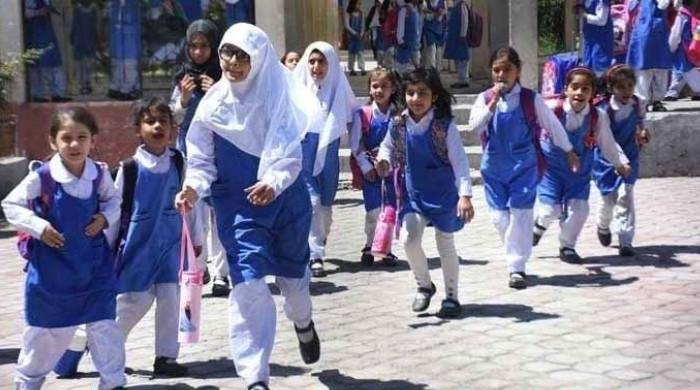
LAHORE: The Punjab government on Monday announced the closure of all educational institutions as the provincial authorities moves to address economic pressures caused by the conflict in the Middle East.
The announcement comes as part of measures by Punjab Chief Minister Maryam Nawaz, following a sharp rise in petroleum prices amid global supply disruptions from the ongoing Middle East conflict.
Under the new rules, all schools, colleges, and universities will remain closed from March 10 to March 31. Educational institutions may continue online classes, while examinations will go ahead as scheduled.
The measures come as Pakistan, similar to other global economies, is facing fuel supply constraints due to the closure of the Strait of Hormuz, a key route for the movement of fuel supplies around the world.
Major oil-producing countries reported hurdles in supplying fuel to buyers after Iran began retaliating against US bases in the Middle East, following joint strikes by the US and Israel.
With supply routes disrupted, Pakistan announced a 20% increase in the price of petrol and diesel, leading to austerity and simplicity measures across the country.
In this regard, Punjab suspended official outdoor events, while cultural events, such as the Horses and Cattle Show, have also been postponed.
Under the new directives, provincial ministers will not receive government fuel until the petroleum shortage is resolved.
Government officials will see an immediate 50% reduction in petrol and diesel allowances, while protocol vehicles accompanying ministers have been limited to a single car for essential security needs.
A work-from-home policy will be implemented in government offices, with only essential staff to attend physically.
Online services under “Maryam Ki Dastak” and e-business platforms, however, will continue operating for citizen convenience.
Further, CM Maryam ordered the formation of district-level petrol monitoring committees, while the Punjab Information Technology Board (PITB) has been tasked to develop a track and trace system for the movement of petroleum products.
Local administration, police, and paramilitary officials will be part of the team developing the monitoring system.
Meanwhile, the Punjab chief minister said that only additional support staff movement is restricted, clarifying that government offices will work uninterrupted.
She directed authorities to issue an advisory to the private sector to implement work-from-home policies, limit non-essential events, and call only necessary staff to offices.
Provincial authorities have been directed to monitor transport fares across all districts, with legal action against excessive or unauthorised fares.
The Punjab CM also advised citizens to avoid unnecessary purchases, refrain from outdoor events, and reduce late-night shopping.
The Balochistan government had earlier announced similar measures for educational institutions, closing all schools across the province from March 10 until 23 March.
The provincial education department said all public and private colleges and universities will remain closed during the period.
Despite the closures, the education department said ongoing initiatives — including the school enrolment campaign and the digital school census — will continue according to the previously announced schedule.
KP unveils fuel conservation plan
Separately, the Khyber Pakhtunkhwa government decided to conduct all official departmental meetings virtually and introduce a 50% work-from-home policy in government offices.
Special Assistant to the Chief Minister on Information Shafi Jan said in a statement that the provincial cabinet has approved a fuel conservation and responsible governance initiative.
He said the measures would be implemented for two months on the instructions of the chief minister, adding that their extension would depend on a review of the prevailing situation.
Under the plan, the cabinet has also approved a 25% reduction in fuel allowance for official vehicles, increasing the total cut to 50%, as a previous 25% reduction introduced during Covid-19 measures is already in place.
However, police, Rescue 1122 and other law-enforcement agencies will be exempt from the fuel cuts.
The government has further decided to significantly reduce the unnecessary use of VIP protocol vehicles and helicopters, while austerity measures have also been imposed on government expenditures.
The statement added that unnecessary ceremonies and official dinners have been banned to ensure greater financial discipline.
The CM’s aide said a proposal is also under consideration to keep educational institutions closed on Fridays to reduce fuel consumption.
He added that petrol pumps will be monitored daily and strict action will be taken against hoarding, while the supply of diesel for farmers and wheat harvesting will be ensured.
