

Last Updated:
Venous disease once considered a problem of older adults is emerging as a health concern for young professionals due to prolonged sitting/ standing, sedentary lifestyle, obesity




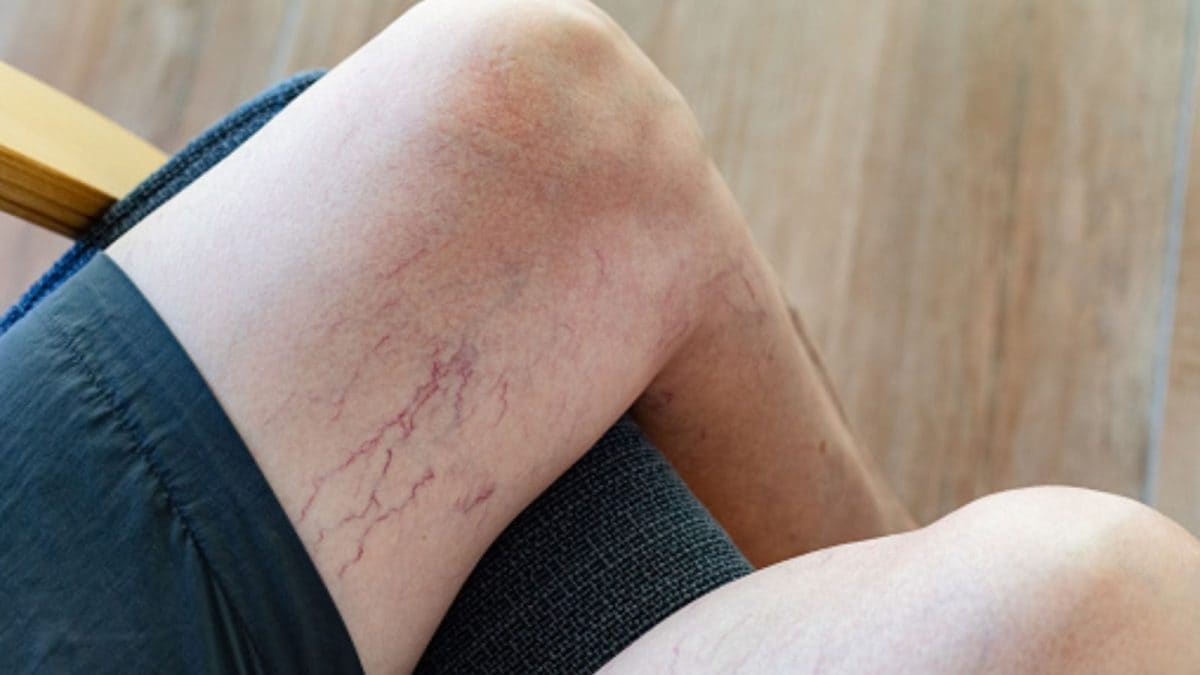
Common early symptoms include leg pain, heaviness, swelling around the ankles, cramps at night, or a burning sensation after prolonged standing or sitting. (Getty Images)
Vascular specialists across major Indian metros are witnessing a noticeable rise in venous disorders among people in their 20s and 30s. Cases of varicose veins, venous reflux and even deep vein thrombosis (DVT) are no longer confined to older adults. Some reports suggest nearly a 30% increase in diagnoses among men aged 25 to 45 in recent years.
Once seen largely as an age-related condition, venous disease is now emerging as a workplace health concern, particularly among young professionals. Long hours of sitting or standing, sedentary routines, rising obesity levels and high-stress urban lifestyles are contributing to this shift.
So what exactly is venous disease, what warning signs should you look out for, and how is it treated today?
What Is Venous Disease In Simple Terms?
Veins play a crucial role in circulation. While arteries carry oxygen-rich blood from the heart to the body, veins return blood back to the heart. In the legs, this journey happens against gravity. To make it possible, veins rely on one-way valves and the contraction of leg muscles during movement.
“Venous disease includes conditions like chronic venous insufficiency and varicose veins, where the blood in the veins of the legs accumulate due to increased pressure. Medically, this happens when the vein valves weaken or fail, causing backward blood flow, which leads to pooling or vein enlargement,” said Dr Avik Bhattacharya, Director and Head of Interventional Radiology, CK Birla Hospitals.
The most visible form is varicose veins — enlarged, twisted veins that appear blue or purple under the skin. Spider veins are smaller and more superficial. Chronic venous insufficiency is a more advanced condition where poor circulation leads to swelling, skin changes and, in severe cases, ulcers.
Deep vein thrombosis (DVT) is more serious. It involves a blood clot forming in a deep vein, usually in the leg. If part of the clot breaks off and travels to the lungs, it can cause a potentially life-threatening pulmonary embolism.
Common early symptoms include leg pain, heaviness, swelling around the ankles, cramps at night, or a burning sensation after prolonged standing or sitting. These signs are often dismissed by younger individuals as “normal tiredness”.
Why Young Indians Are Now At Higher Risk
“Young men and women have always had venous disease; it simply was not diagnosed until earlier ages because of the limited knowledge of the condition and the lack of appropriate diagnostic testing available,” said Bhattacharya.
He said young adults see a physician for chronic venous insufficiency (CVI) or varicose veins as they can no longer tolerate the symptoms, Dr Bhattacharya said.
The most common reason for venous disease in young adults is poor lifestyle choices, and long work hours. Many young professionals in IT, finance, consulting and corporate sectors spend eight to 12 hours seated. When leg muscles remain inactive for long periods, blood circulation slows and begins to pool in the lower limbs. Over time, this increases pressure inside the veins and weakens valve function.
“Sitting, or standing in one position with low movement, irregular sleep habits, dehydration, and high-stress work environments wreak havoc on the veinous (venous) blood flow to legs, causing the accumulation of blood in the veins over time,” points out Dr Bhattarcharya.
Long commutes compound the issue. In cities like Bengaluru, Mumbai and Delhi, professionals may spend hours in traffic each day, further reducing movement. Remote work has not necessarily improved matters; working from home often involves even fewer breaks and more continuous sitting.
Moreover, chronic stress can influence blood pressure and inflammatory pathways. Irregular sleep patterns, poor hydration and high-sodium diets common in fast-paced urban life may contribute to vascular strain.
Frequent travel is another factor. Business trips involving long-haul flights or extended road journeys can increase the risk of DVT, particularly if individuals remain seated for hours without stretching. Cabin pressure changes and dehydration during flights can further elevate clot risk.
Obesity and smoking, both rising among young adults, also increase susceptibility. Hormonal factors, including the use of oral contraceptives, may further heighten DVT risk in women.
“Another aspect of this problem is that individuals have the misconception that they are ‘young and healthy.’ Most people don’t realize how they have changed over the years (i.e. beginning to get heavier legs) and ignore the early symptoms associated with developing disease (e.g. heaviness of legs, swelling, muscle cramps at night, visualizing your veins, or unexplained fatigue of the legs). By the time individuals get medical assistance, the leg disease has progressed significantly. Poor posture (especially while sleeping), lack of breaks in movement, frequent travel, smoking, and weight fluctuations all contribute to increased venous pressure,” explained Dr Bhattacharya.
How Venous Disease Is Diagnosed And Can It Be Treated At Home?
The good news is that early-stage venous disease is manageable, if detected in time. Diagnosis typically begins with a clinical examination followed by a Doppler ultrasound, a non-invasive imaging test that evaluates blood flow in the veins. The scan can identify valve dysfunction or clot formation.
“There are very modern and minimally invasive interventional radiology therapies that allow a patient to return to work quickly with minimal downtime. However, such a diagnosis cannot be made at home since a physical exam and precise imaging are required to access vein structure and blood flow and confirm venous insufficiency,” explained Dr Bhattacharya.
In mild cases, lifestyle modification plays a central role. Doctors recommend regular movement breaks, leg elevation, weight management, hydration and avoiding prolonged sitting or standing.
Compression stockings are commonly prescribed to improve circulation by applying graduated pressure to the legs.
For more advanced cases, minimally invasive procedures have transformed treatment options. Sclerotherapy involves injecting a solution into affected veins to collapse them. Endovenous laser or radiofrequency ablation uses heat to seal faulty veins. These procedures are usually done under local anaesthesia and allow patients to resume normal activity quickly.
In cases of DVT, anticoagulant medications are prescribed to prevent clot growth and reduce complications.
Is Venous Disease A Workplace Health Issue?
The rise of venous disease among young professionals raises broader questions about workplace health in India’s evolving economy.
Corporate wellness programmes often focus on mental health, fitness challenges and general health check-ups. Vascular health rarely features prominently in preventive screening.
Given the sedentary nature of many modern jobs, some physicians argue that employers should actively encourage movement breaks. Simple interventions such as standing desks, reminder alerts for stretching, short walking meetings could make a meaningful difference.
“Young professionals need to recognise that feeling discomfort in their legs is not a part of normal aging. They can prevent further complications by getting evaluated in a timely manner, correcting their lifestyle habits and getting early treatment,” Dr Bhattacharya.
Ergonomic workplace design also matters. Chairs that support posture and allow leg movement, along with work cultures that normalise short mobility breaks, can reduce risk.
Public health messaging may also need updating. While awareness around heart disease and diabetes has grown, venous disorders remain under-recognised among younger demographics.
Screening initiatives, especially for high-risk individuals — those with family history, obesity, smoking habits or frequent travel — could help detect early signs before complications develop.
How To Prevent A Venous Disease
For individuals, small habits can significantly reduce risk. Experts recommend standing or walking for five minutes every hour. Simple calf raises at the desk, ankle rotations, and short corridor walks can stimulate blood flow.
During flights or long drives, moving the legs frequently and staying hydrated are crucial. Maintaining a healthy weight and avoiding smoking also reduce vascular strain.
Regular exercise, particularly activities that engage the legs such as brisk walking, cycling or swimming, strengthens calf muscles and improves venous return.
Above all, persistent leg discomfort should not be ignored. Early consultation with a physician can prevent long-term complications.
A Sign Of Changing Health Patterns
The rise of venous disease among India’s young workforce reflects a broader shift in health patterns tied to rapid urbanisation and technology-driven work culture.
Youth is no longer an automatic shield against lifestyle-related conditions. As India’s economy modernises, its health risks are evolving alongside it.
Venous disease may not attract the same headlines as heart attacks or diabetes, but its growing presence among young professionals signals an urgent need for awareness both at the individual and institutional level.
February 24, 2026, 16:08 IST

Stay Ahead, Read Faster
Scan the QR code to download the News18 app and enjoy a seamless news experience anytime, anywhere.