


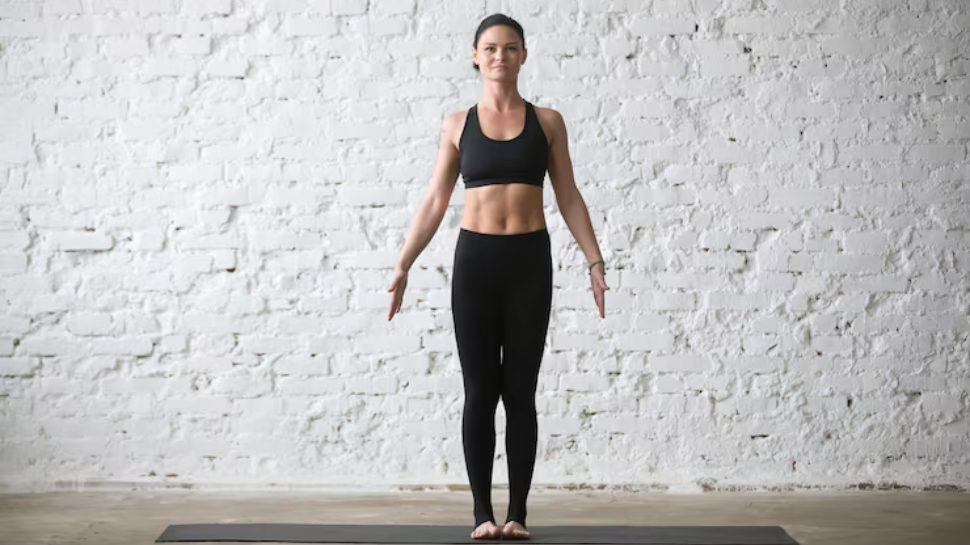
 "Yoga pose of the day: Tadasana (Mountain Pose), improve posture and build a strong foundation for the entire body")
Yoga pose of the day: Yoga is more than just physical exercise; it is a holistic practice that nurtures the body, calms the mind, and restores balance in our fast-paced lives. Regular yoga improves flexibility, strengthens muscles, enhances circulation, supports hormonal balance, and helps manage stress, making it one of the most sustainable ways to maintain long-term health and vitality.
What Does Tadasana Mean?
Tada = Mountain
Asana = Pose
The pose symbolises the stillness, strength, and grounded nature of a mountain—stable at the base, yet effortlessly uplifted through the spine.
How To Do Tadasana (Step-By-Step Guide)
1. Stand upright with your feet together or hip-width apart.
2. Distribute your weight evenly across both feet.
3. Engage your thighs slightly and lift your kneecaps.
4. Lengthen your spine while keeping shoulders relaxed.
5. Let your arms rest alongside your body with palms facing forward.
6. Draw your navel gently inward to engage the core.
7. Lift through the crown of your head while grounding through your feet.
8. Breathe deeply and hold for 5-10 slow breaths.
9. Stay still, observing balance and posture.
Top Benefits Of Mountain Pose
1. Improves Posture Awareness: Teaches correct alignment, helping reduce slouching and spinal strain.
2. Strengthens Legs And Core: Engages muscles subtly, building endurance without visible movement.
3. Enhances Balance And Stability: Trains the body to distribute weight properly, improving coordination.
4. Supports Better Breathing: An upright spine allows lungs to expand fully, increasing oxygen intake.
5. Reduces Back And Neck Tension: Correct alignment relieves pressure caused by prolonged sitting.
6. Builds Mind-Body Connection: Encourages stillness and awareness, making it a grounding, meditative pose.
Who Should Avoid Tadasana Or Practice With Caution?
This pose is generally safe, but take care if you have:
1. Severe balance issues or vertigo
2. Recent foot or ankle injuries
3. Chronic low blood pressure (avoid locking knees)
Always practise gently and use support if needed.
Beginner-Friendly Modifications
1. Stand with feet hip-width apart for better balance.
2. Practise near a wall for support and alignment feedback.
3. Slightly bend knees instead of locking them.
4. Focus on slow breathing rather than holding stiffness.
Common Mistakes To Avoid
1. Locking the knees and pushing hips forward.
2. Collapsing the chest or rounding shoulders.
3. Holding tension in the face or neck.
4. Letting weight shift only to heels or toes.
Why This Pose Deserves A Spot In Your Daily Routine
Tadasana may look simple, but it retrains how you stand, walk, and carry yourself throughout the day. By practising it regularly, you create a strong structural foundation that improves every other yoga pose, and even everyday movements, making your body feel lighter, taller, and more balanced.
(This article is based on information available in the public domain and on input provided by experts consulted.)
