


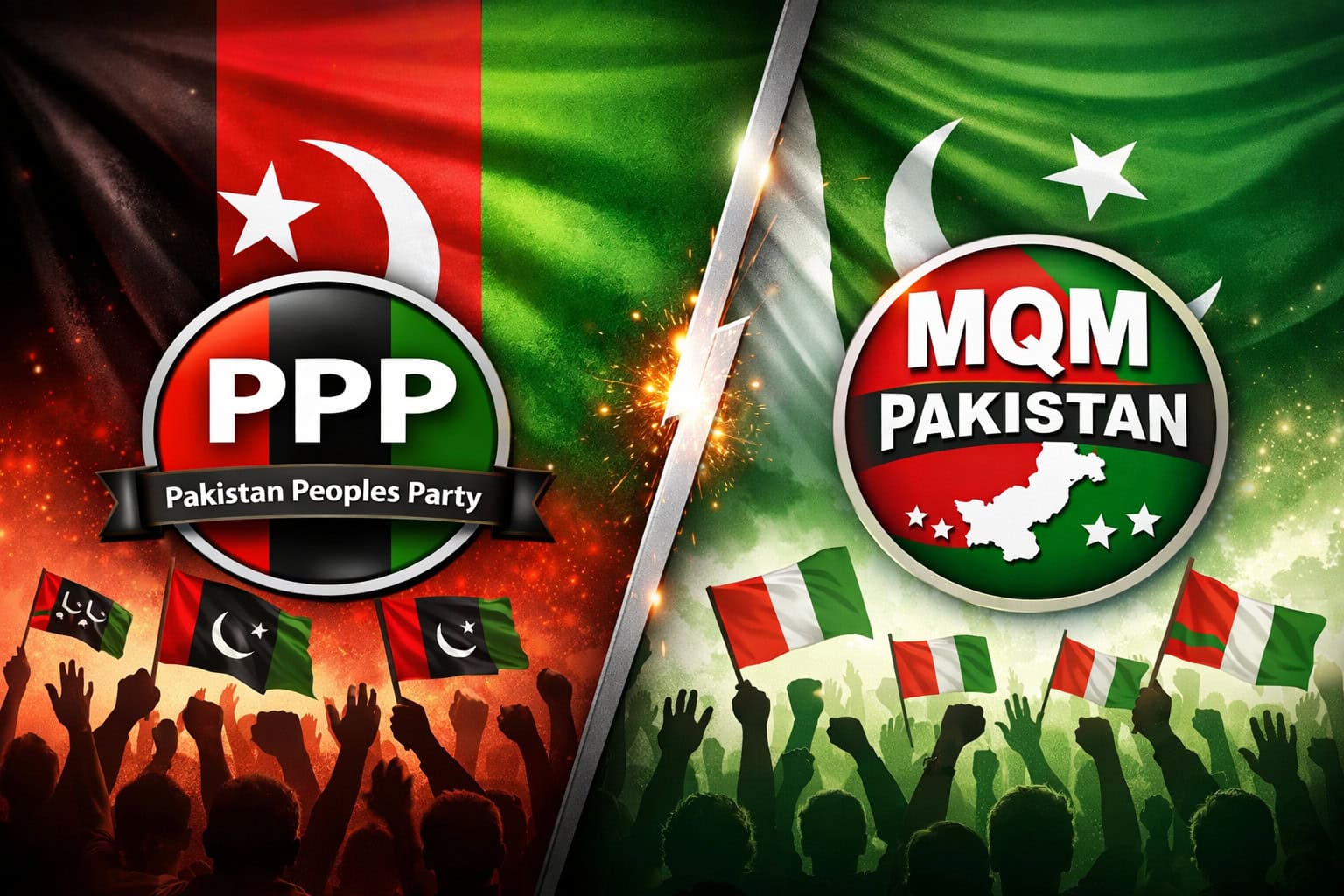
Debating Karachi’s governance within the Sindh Assembly follows a tired, predictable pattern. The moment a framework for better municipal management or local autonomy is introduced, the actual legislation is sidelined. Opponents immediately weaponize the proposal, dismissing practical ideas for city management as deliberate, coordinated plots to sever Karachi from the rest of the province. Debates that should center on the mundane logistics of urban management instead morph into fierce, emotive defenses of Sindh’s geographic integrity. Anyone who dares criticize the structural status quo is cast as an existential threat to provincial identity.
But a measured analysis of Pakistan’s federal design renders this outrage somewhat theatrical. Under Pakistan’s federal structure, redrawing provincial lines is practically a constitutional nonstarter. Knowing this legal impossibility, the persistent panic surrounding Karachi’s status begins to look entirely performative. Why conjure the ghost of an imminent division every time civic management is brought up for debate? Observers are left with a sobering conclusion: this manufactured hyper-sensitivity over borders is less about protecting Sindh from outsiders, and entirely about deflecting public anger away from an unforgivable track record of neglect.
To understand the utility of this distraction, one must audit the reality on the ground. If there was ever a provincial government that hit the absolute jackpot, it is the PPP in Sindh. They have had absolute, unchallenged rule for the last 16 to 18 years. Let that sink in—that is almost an entire generation of uninterrupted control. But it isn’t just about having all the time in the world. Because of the NFC Award, their massive era of rule came right alongside an avalanche of money, routing literal trillions of rupees into the provincial accounts over the years.
This staggering influx of capital demands basic economic questions: Where precisely are these billions being diverted? If annual budgets are consistently broken and expanded, why are the province’s citizens trapped in an accelerating cycle of systemic deprivation?
Karachi itself is the most glaring indictment of this paradox. The city is Pakistan’s undisputed economic engine, generating the bulk of the national revenue. But the on-the-ground reality of Karachi tells a much darker story. The metropolis is quietly breaking down. Clean water is hoarded like a luxury, the transit grid is ruined, and residential refuse is left to rot on the corners. Beyond the failing infrastructure, however, lies a far more terrifying abdication of state power. Citizens step out of their doors into an environment stripped of law and order, where gun-point robberies are an accepted hazard and institutional graft acts as a routine tax on simply surviving. A city of millions is functioning as little more than a political pawn, squeezed for resources but abandoned when it comes to service delivery.
Let’s not fool ourselves into believing this is just a Karachi or Hyderabad problem. If you look at rural Sindh—the guaranteed vote bank our ruling elite takes for granted every election—the situation is equally pathetic. The government loves to make these tall claims about lifting up the rural poor, but ground realities expose the whole farce. Walk into any public hospital today. Whether you are deep in the province or right on the edge of the city, it’s absolute chaos. Sick, poor people are literally camping out on filthy floor tiles because the administration can’t even provide a bed. Basic medicines are mysteriously always “short” at the public dispensary, while crore-rupee diagnostic machines are locked up in dark rooms, gathering dust because nobody bothered to get them repaired.
Simultaneously, the agriculture sector, the absolute lifeline of rural Sindh has been crippled by worsening water scarcity and stagnant, apathetic government policies. With livelihoods eroding under their feet, rural populations face total state silence.
Equally devastating is the politically compromised education system. Institutional interference has largely replaced merit, directly impeding any hope of sustainable development. “Ghost schools” exist across districts while teachers draw salaries for empty classrooms. Without decent schooling or modern vocational training, an entire generation is currently grappling with deep disillusionment. Emotional assembly slogans about provincial unity are hollow comfort for youth who simply cannot find jobs.
Still, let’s not act like the complete breakdown of this province is a one-party show. There’s enough blame to spread around, and any honest look at the last 16 to 18 years means pointing a very firm finger at the MQM-P. They have owned the narrative of the Karachi opposition for years, practically holding the remote control to the city’s political mood. But here is the ultimate tragedy: their chest-thumping about city rights never actually gets anything built. They wield massive influence, yet somehow it never results in anything measurable—no lasting civic improvements, no massive structural upgrades, just more endless speeches. All too often, their political bandwidth is consumed by blame-shifting toward federal or provincial governments. When urban leaders introduce highly volatile propositions—like suggesting the city be placed under federal administration—they play directly into the ruling party’s hands. Such proposals allow the provincial establishment to easily mobilize its rural base against a phantom constitutional threat, shifting public focus away from dry taps and unpaved roads and back into a manufactured culture war.
The shared denominator driving failure on both sides is a systemic refusal to genuinely empower the grassroots. Through calculated legal maneuvers, true municipal authority has been heavily centralized, starving local governments of legal jurisdiction and cash. Urban centers and rural districts alike are chronically mismanaged precisely because real power is hoarded in provincial capitals rather than devolved to mayoral or district levels.
If we are ever going to snap out of this total paralysis, our leaders need to turn off the TV talk-show politics and actually get their hands dirty. The first order of business? Stop the massive financial leakage. There needs to be absolute transparency so that every penny the government claims to spend actually materializes into a real, visible service for the public. Look at our schools—they are begging for a massive crackdown to root out the completely normalized ‘ghost school’ culture and fire absentee teachers. Similarly, the healthcare collapse won’t be solved by just building bigger hospital wards in the metropolis. We have to bring the local and district dispensaries back from the dead. Put proper administrations in charge, make sure the free government medicines aren’t ending up in private pharmacies, and give patients enough local care that they aren’t forced onto bare hospital floors.
Fundamentally, municipal governance must be restored. Local bodies require actual financial resources and unquestioned legal authority over local jurisdictions, managing everything from garbage disposal to municipal water provision. Finally, the Sindh government needs to check its political ego at the door. There is absolutely no shame in looking across provincial borders to see what actually works. If a model is getting the job done—like Punjab’s digital tracking for public services—then the provincial leadership needs to copy it immediately, rather than acting like it’s some massive insult to their pride. The public is thoroughly exhausted by fiery political speeches; the only currency that matters anymore is actual, visible delivery on the street.
In a functioning democracy, politics serves the public. Over a decade and a half of identity-based deflection has proven entirely bankrupt, yielding a broken economy and a fractured society. Until absolute accountability, administrative devolution, and transparent service delivery become the benchmarks of government, high-volume debates over Karachi’s division will remain just another political sleight of hand. Citizens of Sindh do not need legislative battles over geography; they need institutions that actually work.
