


Last Updated:
Tata Sons to clear N Chandrasekaran’s third term; EGM likely as TCS briefs board on AI pivot




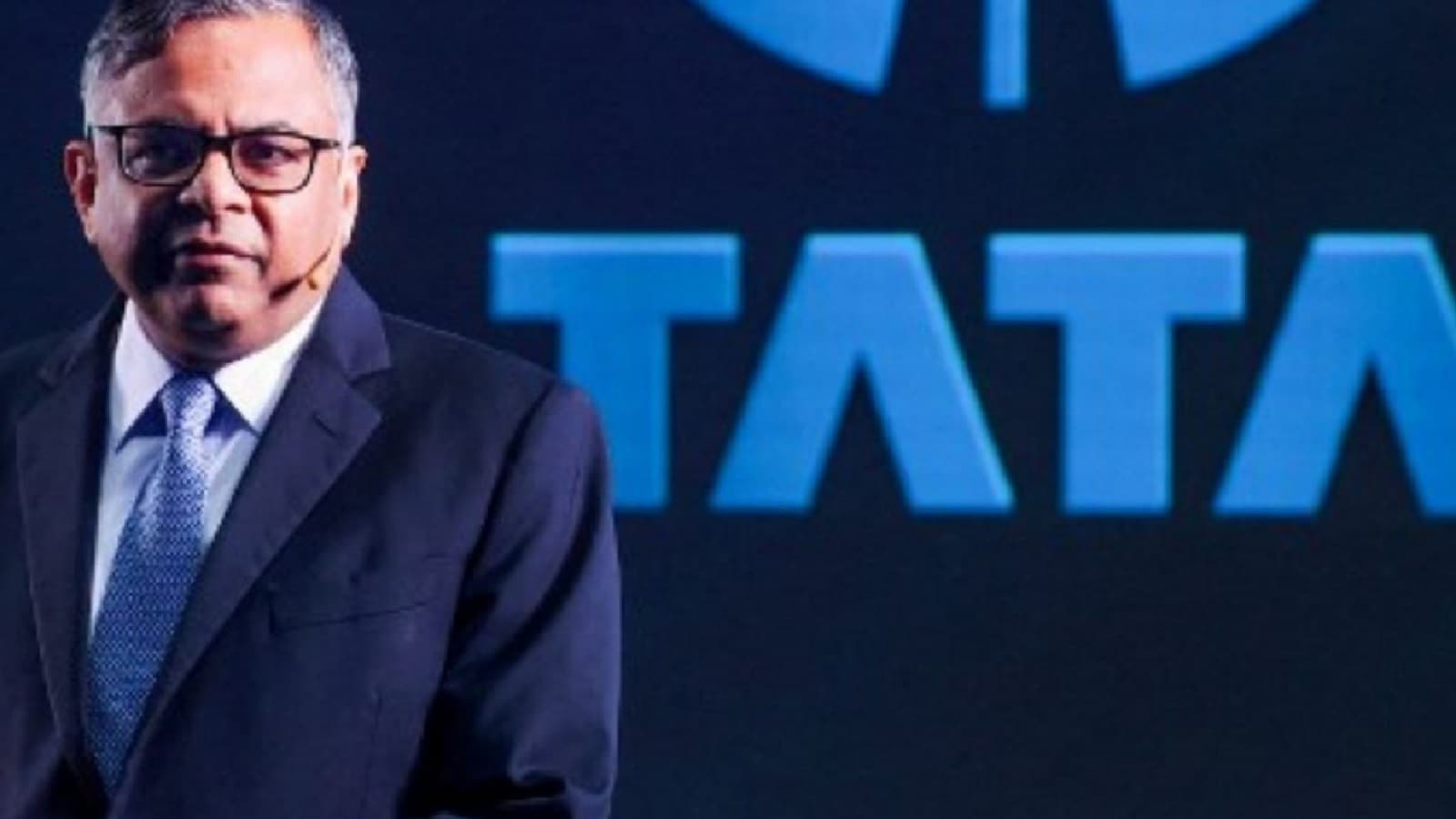
Tata Sons Chairman N Chandrasekaran
Tata Sons is set to convene an extraordinary general meeting (EGM) after its board formally approves the reappointment of N Chandrasekaran as executive chairman for a third term next week — a full year before his current tenure concludes, according to a report by The Economic Times (ET).
The move will require an exception to the group’s retirement policy, which mandates stepping down from non-executive roles at 65. A similar waiver was granted in 2016 when Ratan Tata returned as chairman following the exit of Cyrus Mistry. Chandrasekaran, who turns 63 in June, has the backing of Tata Trusts, the majority shareholder of the holding company, which passed a unanimous resolution in October last year supporting his reappointment in an executive capacity, ET reported.
TCS to Present AI Strategy
Separately, the leadership of Tata Consultancy Services (TCS) will brief the Tata Sons board next week on its artificial intelligence pivot, people aware of the matter told ET. The presentation is aimed at addressing concerns following a sell-off in technology stocks, including TCS, amid rapid AI-driven disruption.
Heightened oversight of TCS comes as global AI breakthroughs — including tools such as Claude Cowork — begin challenging traditional IT services models, the report said.
Board members are also expected to receive updates on key developments at Tata Electronics and Air India, ET added. Tata Sons declined to comment on the developments.
Officials close to the matter told ET that Chandrasekaran’s reappointment in an executive role is aimed at signalling leadership continuity at a critical juncture.
Focus on Execution and Profitability
A renewed mandate would allow Chandrasekaran to continue steering large-scale investments — estimated at $120 billion — across semiconductors, electric vehicle batteries and Air India.
“Chandrasekaran brings exceptional execution capability. The scale he has brought to the group since 2017 is clearly visible,” a senior executive told ET.
In its annual report, Tata Sons noted that FY25 began with optimism around macroeconomic stability, moderating inflation and easing interest rates. However, rising policy uncertainty and sharp shifts in global trade dynamics altered that outlook, ET reported.
Tata Sons posted a 24% rise in FY25 revenue to Rs 5.92 lakh crore, while net profit declined 17% year-on-year to Rs 28,898 crore.
Over the past five years, the Tata Group has nearly doubled revenue and more than tripled net profit and market capitalisation, while investing Rs 5.5 lakh crore to become “future fit,” Chandrasekaran wrote in the annual report, as cited by ET. He has said that by FY27, all new businesses are expected to rank among the group’s top five by revenue and turn profitable. Air India, however, may take longer to achieve profitability after a difficult 2025 that included the Ahmedabad air crash.
Dividend-Led Holding Structure
As the holding entity, Tata Sons derives a substantial portion of its income from dividends from group companies, where its stakes range between 8% and 71.74%, ET reported.
The Tata Group’s combined revenue across listed and unlisted entities stood at Rs 15.34 lakh crore in FY25, with net profit of Rs 1.13 lakh crore and a current market capitalisation of Rs 24.39 lakh crore.
Capital allocation for new ventures is being funded through equity investments and internal accruals after Tata Sons voluntarily surrendered its certificate of registration with the Reserve Bank of India last year and repaid over Rs 20,000 crore in debt to remain unlisted, according to ET.
Chandrasekaran, a TCS veteran, joined the Tata Sons board in October 2016 and became chairman in January 2017. He was granted a second five-year term in February 2022.
 Click here to add News18 as your preferred news source on Google.
February 19, 2026, 07:57 IST
Read More
