

Last Updated:
Aisha had lost interest in her activities like sketching and meeting friends, meals tasted bland; sleep came in fits and guilt crept in with thoughts of “Am I a bad mother?”




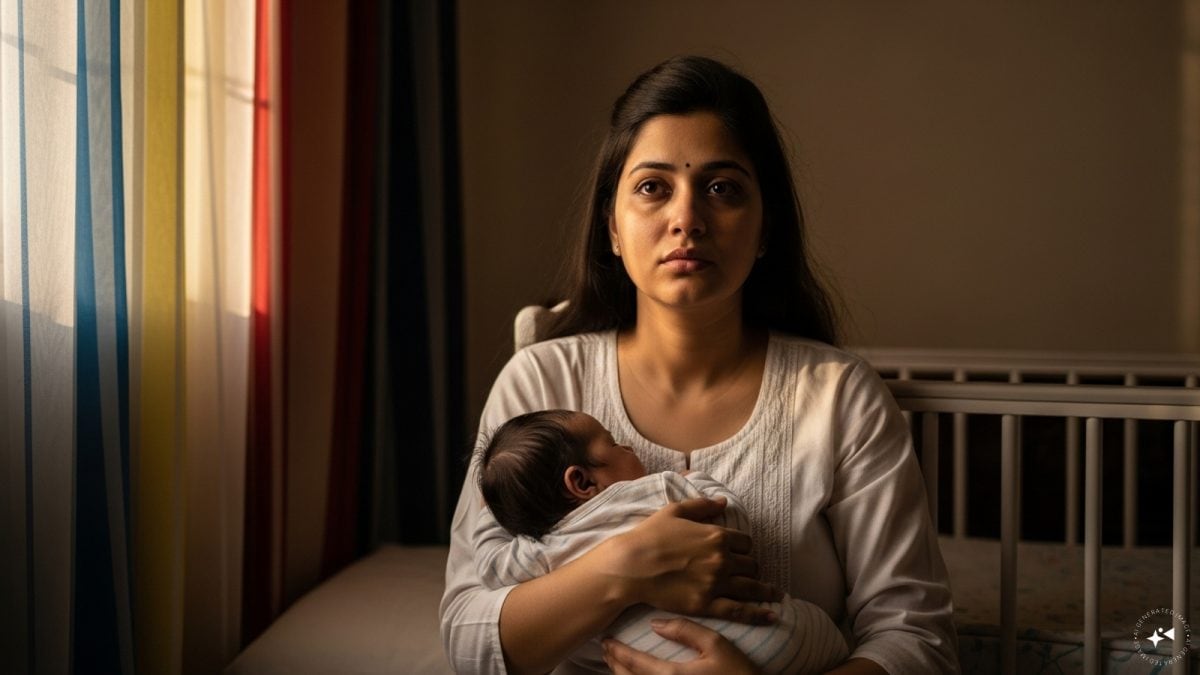
As per the World Health Organization, globally around 13% of new mothers experience postpartum depression, rising to nearly 20% in developing countries like India (Image: AI/Representational)
Postpartum depression (PPD) is a serious mental health condition that affects millions of new mothers worldwide, often sneaking in under the guise of normal post-birth adjustments. According to recent data from 2025, about 1 in 5 women in India experience symptoms of postpartum depression (PPD) with common mental disorders affecting reproductive-age women disproportionately, with PPD rates between 22-30% in urban settings.
As per the World Health Organization, globally around 13% of new mothers experience postpartum depression, rising to nearly 20% in developing countries like India. Unlike the temporary “baby blues” that resolve within two weeks, PPD can persist for months or even years if untreated, leading to severe impacts on the mother, baby, and family. Yet, many women brush off early signs like persistent sadness, anxiety, or fatigue as mere exhaustion from motherhood, delaying crucial help.
For Aisha Mehta, a 27-year-old marketing executive from Gurugram, whose journey into motherhood began with joy like everyone but quickly spiraled into a unpleasant and scary nightmare. It started innocently enough in early 2025, just weeks after delivering her first child, a healthy baby girl named Tara. Aisha, thrilled at first, soon found herself overwhelmed by an unrelenting fog of despair.
“I thought it was just the lack of sleep and the demands of a newborn baby,” she recalls. Mornings blurred into nights as she struggled to bond with Tara, often staring blankly at the crib while tears streamed down her face. Her husband, Sumit, noticed her withdrawing from family gatherings and losing interest in her once-beloved hobbies like painting, but they attributed it to the chaos of new parenthood.
Explaining how early emotional changes can be misunderstood, Madeeha Mukhtar, Clinical Psychologist at Paras Health, told News18, “After childbirth, it is common for mothers to feel emotional, tired, or overwhelmed. These feelings, often called the baby blues, usually start a few days after delivery and go away within two weeks. A mother may cry easily or feel moody, but she can still care for her baby and manage daily tasks. However, postpartum depression is more intense and lasts longer. Signs include deep sadness, feeling hopeless, losing interest in activities, difficulty bonding with the baby, constant anxiety, or thoughts of self-harm. If these feelings continue beyond two weeks or interfere with daily life, it may be more than normal adjustment, and support should be considered.”
For months, Aisha powered through, dismissing her symptoms as “normal mom stuff.” She experienced severe mood swings, crying spells that lasted hours, and a crushing sense of guilt for not feeling the instant love she expected. Appetite vanished, leading to unintended weight loss, and insomnia plagued her even when Riya slept soundly. “I felt like a failure,” Aisha says. “Everyone kept saying, ‘It’s just the baby blues; it’ll pass.’ But it didn’t.” Subtle physical complaints, like constant headaches and fatigue, were chalked up to hormonal shifts post-delivery.
Little did she knew, these were classic hallmarks of Postpartum depression, which can manifest as depressed mood, loss of pleasure in activities, irritability, and even intrusive thoughts.
The turning point came one stormy evening in May 2025, five months postpartum. Alone with Tara while Sumit was at work, Aisha hit rock bottom. Overwhelmed by a wave of hopelessness, she experienced a terrifying thought, a fleeting but alarming one of ending it all and to just escape.
“I looked at my baby and felt like I was watching a stranger,” she later recalled. “There was no bond, no warmth, just emptiness.” Relatives praised her for being ‘so calm and composed’, mistaking her withdrawal for quiet strength. Suddenly panic surged and tears she hadn’t shed in months flooded out, her heart raced, and she collapsed onto the floor in uncontrollable sobs, terrified she might never feel ‘normal’ again. Shaken, she called her sister, who rushed over and insisted on immediate medical help.
Aisha had lost interest in her favourite activities like sketching and meeting friends. Meals tasted bland; sleep came in fits even when Tara rested peacefully. Guilt crept in, “Why can’t I feel anything? Am I a bad mother?” Yet, she kept silent, fearing judgement in a society where new mums are expected to radiate happiness. In India, where family expectations and postpartum rituals often isolate women further, such symptoms are frequently normalised as ‘hormonal’ or ‘temporary’.
Highlighting the role of social expectations, Mukhtar explains, “Society often shows motherhood as a time of pure happiness and natural bonding. Because of this expectation, many women feel they must always appear grateful and joyful. When they experience sadness, frustration, or emotional pain, they may feel guilty or ashamed. Some fear being judged as a bad mother, so they hide their struggles instead of talking about them. This pressure can make emotional distress worse because the mother feels alone and unsupported. Open conversations and understanding from family and community can help reduce this silence.”
Even her husband Sumit noticed her growing isolation no more laughter over shared meals, no enthusiasm for outings but chalked it up to the adjustment phase of first-time parenthood.
At the hospital, a psychiatrist evaluated Aisha and weeks later confirmed the diagnosis for ‘severe’ postpartum depression. “It was a shock,” Aisha says. “I’d never had mental health issues before. But the hormonal changes after delivery, combined with isolation during maternity leave and the pressure to be the ‘ideal’ mum, had built up silently.”
Experts emphasise that early support and lifestyle adjustments can play a critical role in recovery. Mukhtar notes, “New mothers can protect their emotional health by building a strong support system. Talking openly with a partner, family member, or friend can reduce feelings of isolation. Getting enough rest, eating balanced meals, and taking short breaks for self-care are also important. Joining a mothers’ support group can help women realise they are not alone in their experiences. Setting realistic expectations and accepting that it is okay to ask for help can ease pressure. If emotions feel overwhelming or do not improve, speaking to a clinical psychologist or psychiatrist early on can prevent the situation from becoming more serious.”
February 13, 2026, 17:32 IST

Stay Ahead, Read Faster
Scan the QR code to download the News18 app and enjoy a seamless news experience anytime, anywhere.