


Last Updated:
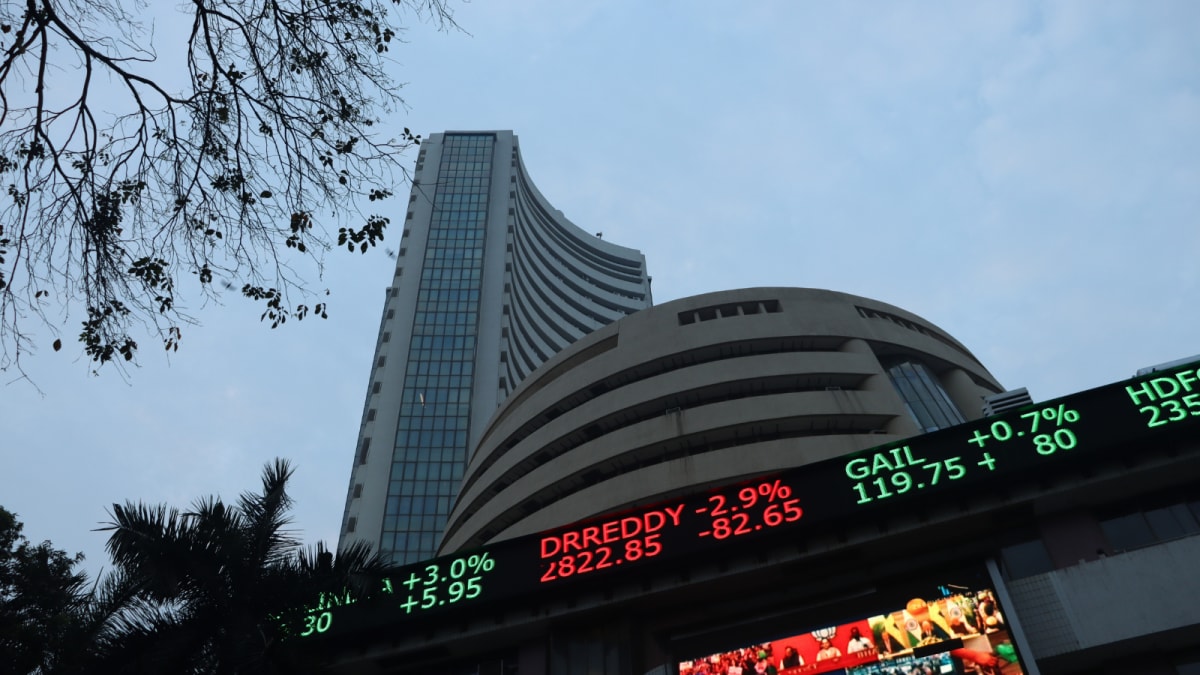
On Sunday, February 1, FM Sitharaman will present a high-stakes Union Budget to markets that will remain open and highly sensitive.



On Sunday, February 1, FM Sitharaman will present a high-stakes Union Budget to markets that will remain open and highly sensitive.
Union Budget Expectations 2026: With the Indian rupee hovering near record lows and foreign investors pulling out a hefty $4 billion this month — taking total outflows in 2025 to $19 billion — attention has turned firmly to Finance Minister Nirmala Sitharaman. On Sunday, February 1, she will present a high-stakes Union Budget to markets that will remain open and highly sensitive. With a crucial US trade deal still uncertain, the Budget lands at a volatile intersection of geopolitical risk and domestic economic pressure.
Investors are looking for a fine balance: fiscal discipline without sacrificing protection for sectors exposed to potential US tariff shocks. More importantly, markets want credible, long-term signals that can stabilise capital flows and safeguard India’s growth trajectory amid heightened global uncertainty.
Rahul Bajoria, economist at BofA Securities, expects capital expenditure to rise to Rs 12.5 lakh crore (3.2% of GDP) in FY27. He believes the government’s focus may stay concentrated on defence, railways and shipbuilding, while allocations toward roads, rail infrastructure and housing could stay relatively subdued in FY27.
India’s nuclear push is also drawing interest. Abhinav Tiwari, Research Analyst at Bonanza, said NTPC offers the most comprehensive listed exposure to India’s nuclear ambitions, with a target of 30 GW nuclear capacity by 2047. Its Rs 42,000 crore Mahi Banswara JV with NPCIL positions it for long-term growth. L&T and Hitachi Energy India provide indirect plays through reactor engineering, heavy forgings and grid infrastructure.
The data centre story is another major theme. Tiwari noted that India’s data centre sector is seeing “unprecedented investment momentum,” with hyperscalers committing over $67 billion to cloud and AI infrastructure. Despite producing 20% of global data, India houses only 3% of global data centre capacity. Capacity is projected to reach around 14 GW by 2035, with cumulative investments nearing $70 billion.
Bharti Airtel (Nxtra) and Adani Enterprises (via AdaniConneX JV) are well placed to benefit from tax and renewable incentives, while Tata Communications gains indirect exposure through STT GDC India. RailTel could benefit from rising government cloud demand, and Netweb Technologies from AI-driven initiatives.
Motilal Oswal said expectations are modest, with the Budget’s room for major announcements narrower than in past years because several measures have already been delivered through extra-budgetary routes. “Equity markets will be assessing it for targeted, selective measures to drive growth in certain sectors and to assuage investor sentiments,” it said.
Bajaj Broking pointed out that the government must balance the near-term need to shield the economy from external trade shocks with long-term infrastructure priorities. The investment narrative is shifting from headline order-book growth to identifying companies with the execution strength and balance-sheet resilience to convert orders into sustainable earnings.
With last year’s Rs 1 lakh crore personal income tax relief still filtering through the economy, analysts expect any fresh consumption push to be targeted rather than broad-based. Motilal Oswal said the FY27 Budget is likely to lean more toward capex in strategically important sectors due to “prevailing geopolitical compulsions.”
Stocks in Play: Defence to Renewables
Axis Securities flagged Ultratech Cement, Maruti Suzuki, Bharti Airtel, NALCO, Prestige Estate, Chalet Hotels, Max Healthcare and Credit Access Grameen as stocks to watch. Thematic ideas include GMDC (rare earths), BEL and MTAR (defence), Amar Raja Energy (EVs), CESC (power reforms) and M&M Finance (credit growth).
Motilal Oswal’s beneficiary basket includes infra majors L&T, ABB, Siemens, Hitachi and Siemens Energy; defence firms Bharat Electronics, Bharat Dynamics and HAL; cement players Ultratech and JK Cement; gas and power names IGL, Mahanagar Gas, Gujarat Gas, Petronet LNG and GAIL; renewables companies Waaree, Premier, NTPC, Tata Power, Acme and NTPC Green; and real estate developers Brigade, Prestige, Sobha, Lodha and Godrej Properties.
Bajaj Broking has buy calls on HUL (target price Rs 2,590), calling it a direct beneficiary of rural recovery and consumption stimulus. SBI (target price Rs 1,150) is seen as a key proxy for India’s industrial recovery, positioned to capture private capex in renewables, power and steel, with RoA at a record 1.10%.
What Analysts Are Watching
Jefferies’ Mahesh Nandurkar expects continued fiscal consolidation, albeit at a slower pace, with government capex growth of over 10% and a defence tilt. Renewable energy, EMS firms and consumer durables could see action depending on announcements related to Kusum, PLI and potential pay hikes.
He added that capital gains tax relief for FPIs would be positive for equities, though not the base case, while tax incentives that divert flows into debt markets could weigh on equities.
Emkay Global’s Seshadri Sen sees railways, defence, auto ancillaries and EMS as beneficiaries but warns jewellery companies may suffer if gold import duties are raised. Life insurers and housing finance firms could see marginal pressure if the new tax regime is pushed further.
 Click here to add News18 as your preferred news source on Google.
January 30, 2026, 12:53 IST
Read More
