


Last Updated:
Bikanervala, founded by Kedarnath and Satyanarayan in 1956, grew from selling rasgullas in Delhi to a global brand with 250 outlets today



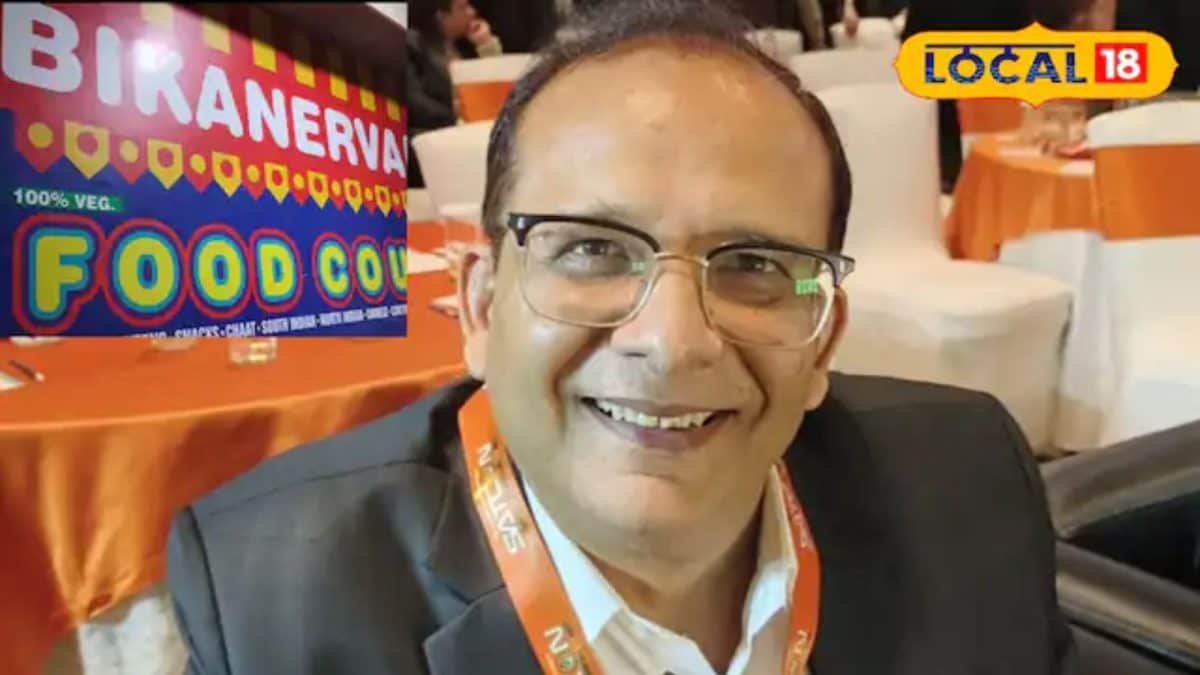
Bikanervala Director Ramesh Kumar revisited the brand’s modest beginnings while discussing sattvic certification and the company’s philosophy.
From selling rasgullas out of a bucket in the narrow lanes of Delhi to building a multi-crore global food enterprise, the story of Bikanervala is one of grit, taste and tradition. Today regarded as one of the most loved desi food brands, its sweets and snacks are considered indispensable at weddings, festivals and celebrations, not just in India, but across the world.
The journey, however, began far from the large factories and expansive outlets the brand is known for today. Speaking to Local18 on the sidelines of Satcon 2026 at a hotel, Bikanervala Director Ramesh Kumar revisited the brand’s modest beginnings while discussing sattvic certification and the company’s philosophy.
Ramesh Kumar said the foundation of Bikanervala was laid in 1956 by his father Kedarnath, fondly known as Kaka, and his uncle Satyanarayan, who migrated to Delhi from Bikaner that year. With no capital or infrastructure, the two began by making rasgullas and traditional snacks by hand and selling them door to door across different parts of the city, carrying their goods in buckets.
As word spread and demand grew, Kedarnath opened a small shop in Delhi and hired a few workers, personally training them in the art of making Bikaner-style sweets and namkeen. For several decades, the business remained focused solely on sweets and snacks. It was only in 1990 that the family took a decisive step by opening a pure vegetarian restaurant, at a time when such establishments were few and largely unpopular.
Contrary to prevailing trends, the restaurant quickly gained popularity. Ramesh Kumar noted that while Navratri was once the weakest sales period for the business, it has now become the highest-grossing season, driven by the brand’s specially curated Navratri platter offering a wide variety of vrat-friendly dishes. What began with simple offerings such as fruit chaat and puri-aloo sabzi gradually expanded as customer footfall increased.
Describing Bikanervala as a true family-run enterprise, Ramesh Kumar said he grew up helping his father and uncle prepare samosas and kachoris. After completing his education, he formally joined the business at the age of 22.
Today, Bikanervala employs around 11,000 people and operates more than 250 outlets worldwide. Its first international foray was into Nepal, followed by expansion into West Asia, where it now runs 17 outlets in Dubai alone. The brand also has a presence in the United States, the United Kingdom, Australia and New Zealand, carrying with it flavours that once travelled through Delhi’s streets in a humble bucket.
 Click here to add News18 as your preferred news source on Google.
January 22, 2026, 16:23 IST
Read More
