


Last Updated:
The contrast with the Tata group airlines is striking. Air India doubled its cockpit strength—from 1,116 pilots in FY22 to 2,536 in FY24

IndiGo
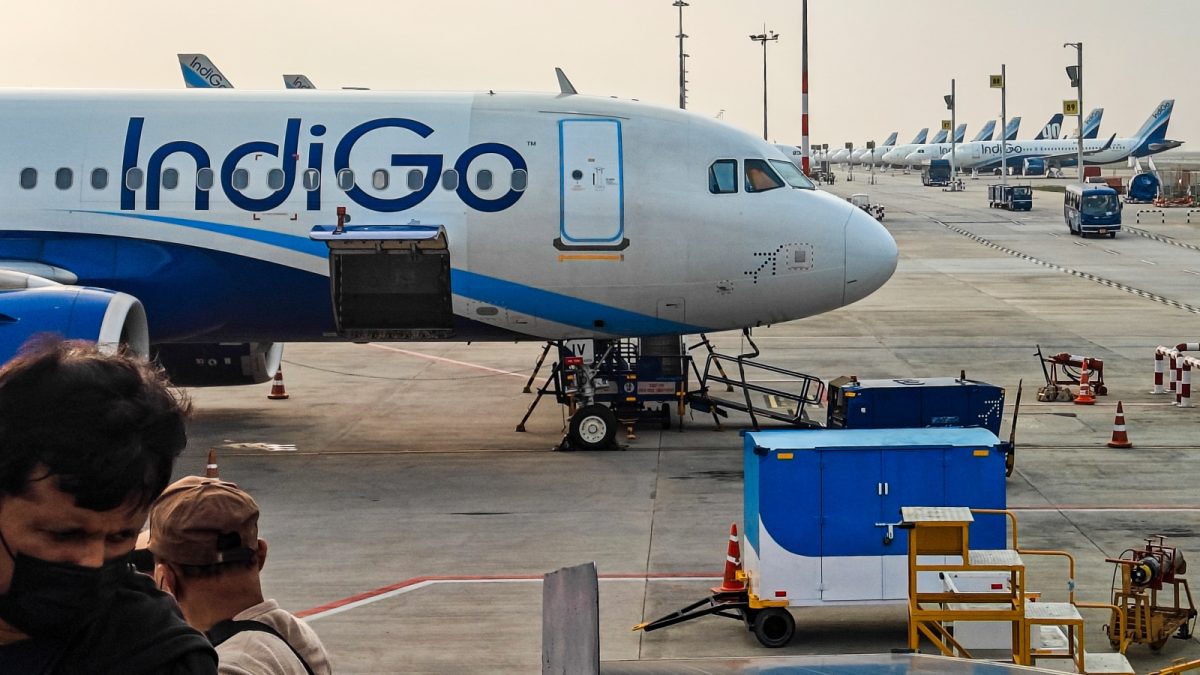
IndiGo’s plan to hire 900 additional pilots by next year may help ease current operational stress, but a Moneycontrol report shows the carrier has expanded its cockpit crew at the slowest pace among major Indian airlines since the pandemic—even as rivals aggressively ramped up hiring.
According to Moneycontrol, between FY22 and FY24, IndiGo increased its pilot strength from 3,791 to 5,038, a rise of 32.9 per cent. Over the same period, India’s total pilot pool grew 35.7 per cent, indicating that IndiGo’s share has dipped slightly despite sustained capacity expansion.
The contrast with the Tata group airlines is striking. Air India more than doubled its cockpit strength—from 1,116 pilots in FY22 to 2,536 in FY24. AIX (formerly Air India Express) tripled its pilot count from 333 to 1,013 as it expanded its international low-cost operations. Combined, the Tata group nearly doubled its pilots from 2,574 to 4,931 in two years. IndiGo added 1,247 pilots in the same period, but at almost half the pace of its main competitor.
IndiGo’s muted growth in pilot numbers stands out given its continued fleet expansion. The airline grew its fleet from 275 aircraft in FY22 to 366 in FY24—up 33.1 per cent, nearly matching the 32.9 per cent rise in cockpit crew. By comparison, Air India expanded its fleet by 32 per cent while boosting pilot strength by more than 90 per cent, signalling a deliberate effort to rebuild bench strength ahead of long-term growth. AIX doubled both its fleet and pilots, while Vistara expanded its fleet and cockpit crew by roughly 40–44 per cent.
At the opposite end, SpiceJet’s dependence on wet-leased aircraft is reflected in its collapsing pilot strength, which fell from 1,091 in FY22 to just 439 in FY24—a drop of nearly 60 per cent. New entrant Akasa Air, starting operations post-pandemic, added 764 pilots by FY24.
The rollout of the revised Flight Duty Time Limitation (FDTL) norms in November—which increased weekly rest to 48 hours and tightened night-duty limits—triggered more than 1,000 IndiGo flight cancellations due to crew shortages. The government has since eased certain norms for the airline to stabilise operations, given that IndiGo carries nearly two-thirds of India’s domestic air traffic.
According to a Livemint report, IndiGo plans to induct 158 pilots by February 10 and another 742 by December next year.
 Click here to add News18 as your preferred news source on Google.
 December 08, 2025, 16:38 IST
Read More
